Why Off-Plan Buyers Need to See Before They Can Touch

Clear visualization for property portal listings.
In Australia's off-plan market, buyers commit to properties that exist only as architectural drawings and promises. The gap between what is and what will be is where sales are won or lost. 3D renders for off-plan property Australia help bridge that gap. They turn floor plans into living spaces, empty lots into communities, and hesitant buyers into confident purchasers.
But not all renders are created equal. Poorly executed images can raise doubts, trigger compliance issues, and slow pre-sales. High-quality renders can accelerate sales, justify premium pricing, and attract buyers before construction begins. This guide explores how Australian developers, marketers, and architects use 3D rendering to successfully pre-sell off-plan properties.
Table of Contents12 sections
The Commercial Case: Why Renders Drive Pre-Sales
Off-plan selling is an exercise in imagination management. Buyers need to visualise lifestyle, not just square metres. Research from Australian property marketing firms consistently shows that listings with high-quality 3D renders receive significantly more enquiries than those relying on floor plans alone. The reason is simple: renders reduce perceived risk.
When a buyer can see the morning light hitting the kitchen bench, the view from the balcony, and the landscaping of the courtyard, the abstract becomes concrete. That emotional connection shortens the decision cycle. For developers, this means faster pre-sales, lower holding costs, and the ability to meet lender pre-sale thresholds sooner.
There's also a pricing advantage. Properties marketed with professional artist impressions can command higher price points because the perceived value is higher. Buyers aren't just purchasing walls and a roof; they're buying a vision that has been professionally articulated.
What Makes a Render Credible? Lessons from Measurement Standards
In the Netherlands, the NEN 2580 standard governs how floor areas are measured, and the BBMI (Branch Brede Meetinstructie) provides a uniform method for measuring existing homes. While Australia has its own measurement conventions, the principle is universal: buyers trust numbers they can verify. 3D renders for off-plan property Australia must accurately represent ceiling heights, room proportions, and window sizes to maintain that trust.
Australian developers should apply the same rigour. Use accurate gebruiksoppervlakte wonen (GO) — the usable living area — and bruto vloeroppervlak (BVO) — gross floor area — as the foundation for any render. These measurements, when correctly applied, ensure that the visual representation matches the legal documentation. If your render shows a spacious living room but the GO tells a different story, you're setting up a dispute.
Similarly, if you're uploading to platforms like Funda (or its Australian equivalents such as Domain and REA), the funda fml upload process demands consistency between the listed area and the visual. The meetinstructies NVM (NVM measurement instructions) are a reminder that standardised measurement protects everyone. In Australia, follow the Property Council of Australia's guidelines and ensure your renders reflect the actual dimensions.
Credible renders are built on accurate data. At DreamChaser, we work from architectural plans and survey data to ensure every
Types of 3D Renders for Off-Plan Marketing
Different stages of the sales funnel require different visual assets. A single hero image won't carry a whole campaign. Here's how to deploy renders strategically:
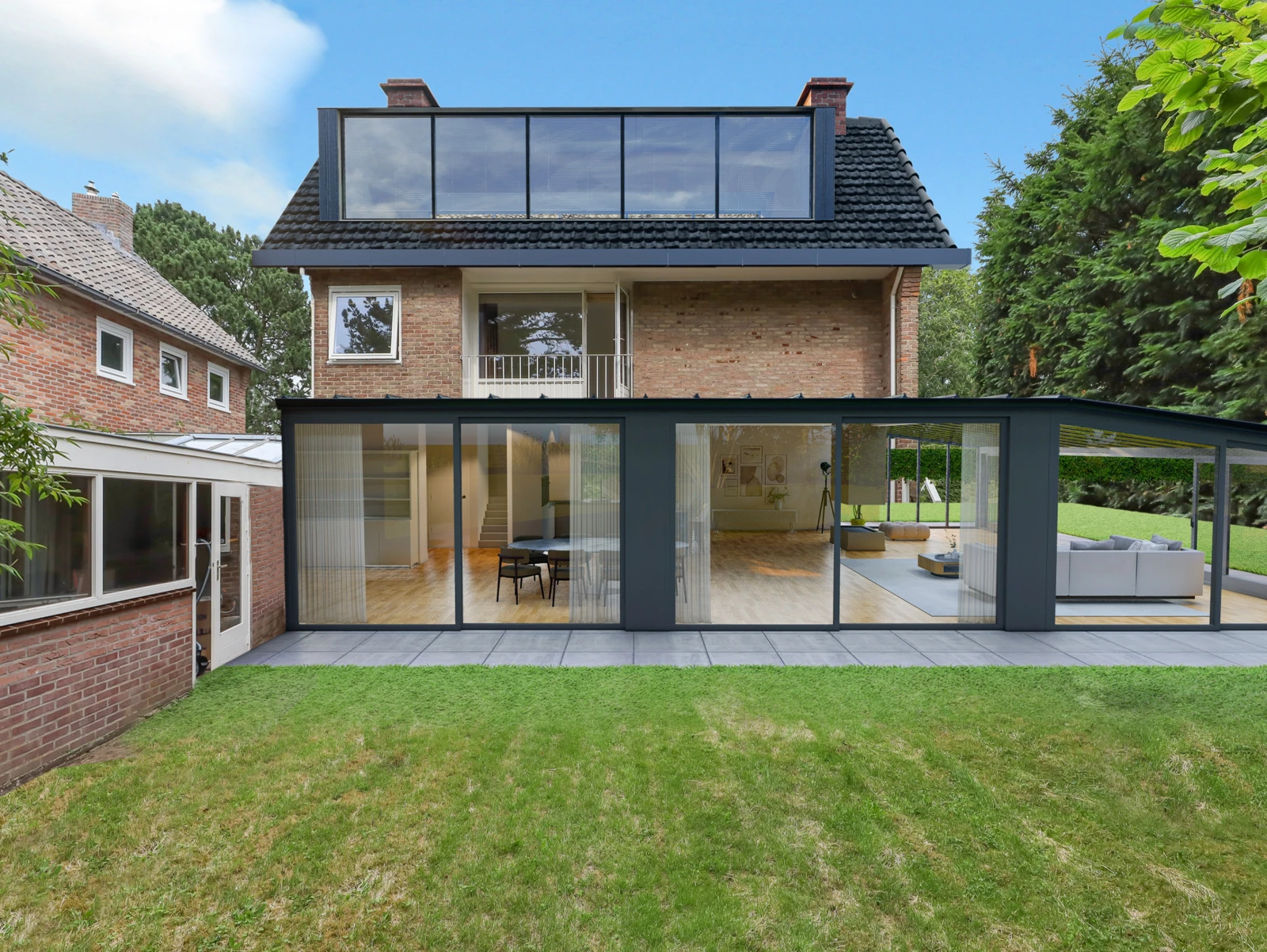
Exterior hero shots: Show the building in its context — streetscape, landscaping, neighbouring structures. These are your billboard and portal images.
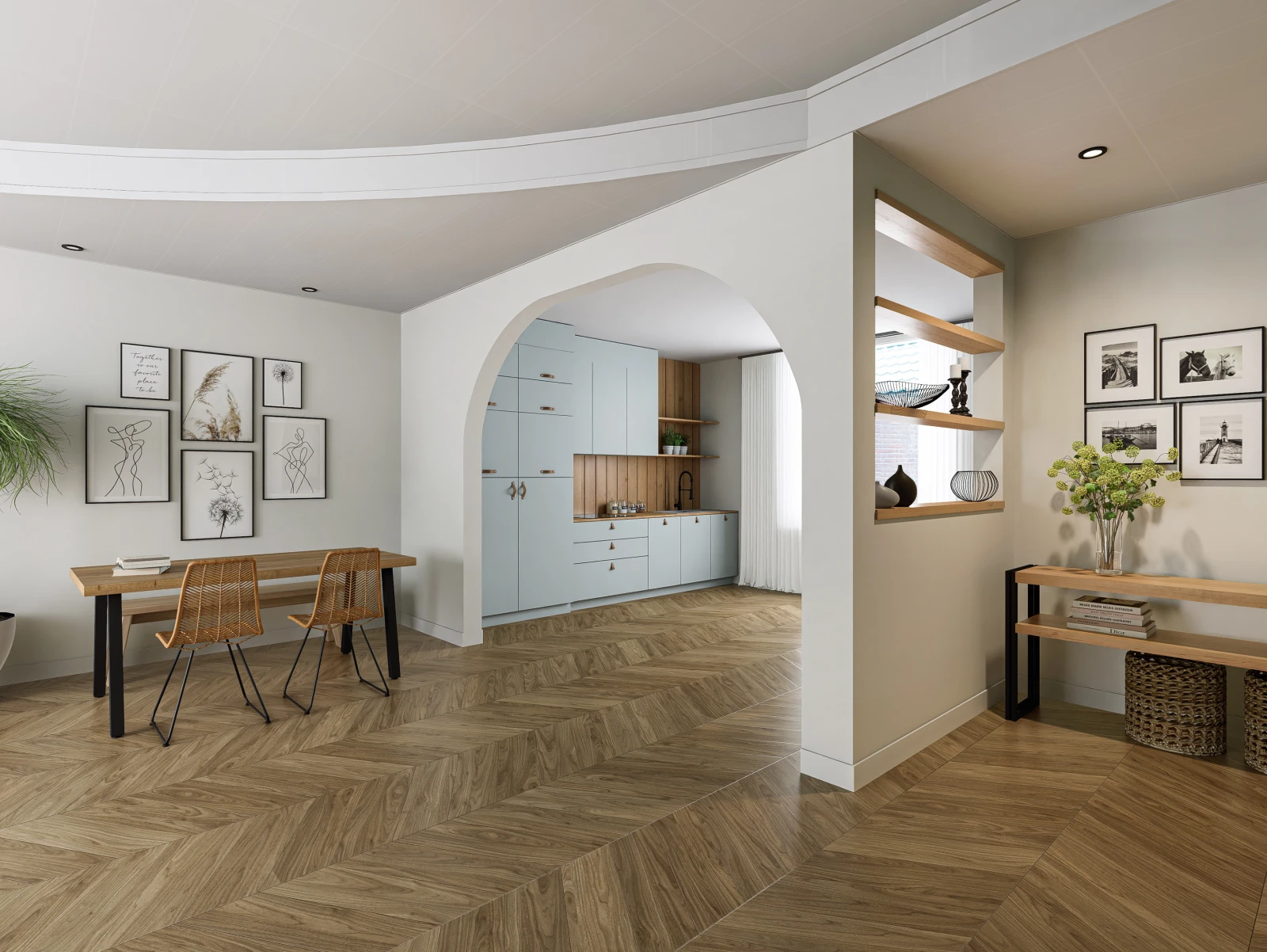
Interior lifestyle renders: Furnished living areas, kitchens, and bedrooms that help buyers imagine daily life. Focus on light, materials, and flow.
Aerial and site-wide views: Essential for master-planned communities. Show amenities, transport links, and the broader neighbourhood.
360-degree and virtual tours: Allow buyers to explore at their own pace. Particularly effective for interstate and overseas buyers who can't visit a display suite.
Before-and-after comparisons: For renovations or urban renewal projects, show the transformation. This builds confidence in the vision.
Animation fly-throughs: Short videos that walk viewers through the property and its surroundings. Ideal for social media and email campaigns.
Each asset type serves a purpose. A common mistake is to over-invest in one hero image and under-invest in the supporting visuals that answer buyer questions. A complete render package should cover exteriors, interiors, amenities, and context.
Cost and Turnaround: What Australian Developers Should Expect
Pricing for 3D renders varies widely based on complexity, resolution, and the number of images. Below is a comparison of typical market rates versus DreamChaser's service model. Note that these are indicative and depend on project specifics.
Service | Typical Australian Market | DreamChaser |
|---|---|---|
Single exterior render (high-res) | AUD 1,200 – 2,500 | From AUD 900 |
Interior lifestyle render | AUD 800 – 1,800 | From AUD 600 |
360-degree virtual tour (per room) | AUD 1,500 – 3,000 | From AUD 1,200 |
Animation fly-through (30 seconds) | AUD 5,000 – 12,000 | From AUD 4,000 |
Turnaround time | 5 – 10 business days | 24 hours (standard) |
Revision rounds | 2 – 3 | Unlimited within scope |
Speed matters in off-plan sales. A 24-hour turnaround means you can respond to market feedback, adjust campaigns, and keep momentum. DreamChaser's workflow is built for this pace without sacrificing precision.

Legal and Compliance Considerations in Australia
Off-plan marketing is regulated. The Australian Consumer Law prohibits misleading or deceptive conduct. Renders must be representative, not aspirational to the point of falsehood. Key considerations:
Disclaimers: Clearly state that images are artist impressions and may not depict final finishes. However, disclaimers don't excuse gross misrepresentation.
Material changes: If the design changes after contracts are signed, you may need to notify buyers. Renders should be updated accordingly.
Measurement accuracy: Ensure that dimensions shown in renders align with the contract plans. Discrepancies can lead to disputes.
Sunlight and views: Avoid exaggerating views or sunlight. Use accurate solar studies where possible.
Working with a render partner who understands these obligations is essential. DreamChaser's team is experienced in Australian compliance requirements and can advise on best practices.
Integrating Renders into Your Sales Funnel
Renders are not just for the brochure. They should be embedded across every touchpoint:
Website and landing pages: Use high-resolution images with interactive elements. Ensure fast load times.
Portal listings: Domain and REA allow multiple images. Lead with the strongest exterior, follow with interiors and amenities.
Display suites: Large-format prints and screens create an immersive experience. Pair with physical samples of materials.
Email campaigns: Drip-feed renders to nurture leads. Show different aspects of the property over time.
Social media: Short animations and 360 tours perform well on Instagram and Facebook. Use them to drive traffic to your website.
PR and media: High-quality renders increase the likelihood of media coverage. They make the project tangible for journalists.
Consistency is key. The same render should appear across all channels to reinforce recognition. A fragmented visual identity confuses buyers and weakens the brand.
Case Study: How a Melbourne Developer Pre-Sold 60% Before Construction
A mid-sized Melbourne developer approached DreamChaser with a 120-apartment project in the inner suburbs. They had planning approval but no display suite and a tight pre-sale target to satisfy their lender. We produced a suite of 12 3D renders for off-plan property in Australia — exteriors, interiors, amenities, and a 360 tour — in under a week. The developer used these assets across their website, portal listings, and a targeted email campaign to their database.
Within three months, they had pre-sold 60% of the apartments. The renders were cited by buyers as a key factor in their decision. The developer also reported that the quality of the renders allowed them to hold firm on pricing, avoiding the discounts that often plague off-plan launches.
This isn't an isolated result. When renders are accurate, emotive, and deployed strategically, they shorten the path from interest to contract.
Choosing the Right Render Partner
Not all render studios are equal. Look for:
Precision: Do they work from architectural plans and survey data? Can they demonstrate dimensional accuracy?
Speed: What is their standard turnaround? Can they handle urgent requests?
Experience: Have they worked on Australian off-plan projects? Do they understand local regulations?
Range: Can they produce stills, animations, and interactive tours? A one-stop shop reduces coordination headaches.
Revisions: How many rounds are included? What is the process for changes?
Price transparency: Are costs fixed or hourly? Are there hidden fees?
DreamChaser ticks these boxes. With a 24-hour turnaround, 99.8% precision, and a team that understands the Australian market, we're the partner of choice for developers who want to sell out faster.
Common Mistakes to Avoid
Even experienced developers fall into traps. Here are the most common:
Overpromising on views: If the view will be built out, don't show it. Buyers will remember.
Ignoring context: A render that shows the building floating in a void feels unrealistic. Include neighbouring buildings, trees, and streetscape.
Using low-resolution images: Pixelated renders undermine credibility. Invest in high-resolution outputs.
Inconsistent lighting: If one render shows midday sun and another shows dusk, it creates confusion. Use consistent lighting conditions across a set.
Skipping the disclaimer: Always include a clear statement that images are artist impressions.
Avoiding these mistakes is easier when you work with a professional team. DreamChaser's quality assurance process catches issues before they reach your buyers.
The Future of Off-Plan Marketing: Interactive and Immersive
Buyers increasingly expect more than static images. 3D renders for off-plan property Australia are evolving beyond traditional visuals, with virtual reality (VR) and augmented reality (AR) becoming more accessible. Imagine a buyer putting on a headset and walking through their future apartment, or using their phone to see a building overlay on a vacant lot. These technologies are no longer science fiction; they're being used in Australian projects today.
DreamChaser is at the forefront of this shift. We offer VR-ready renders and interactive tours that allow buyers to customise finishes and explore every corner. As the market evolves, developers who embrace these tools will have a competitive edge.
Ready to Pre-Sell Your Next Project?
Professional property media that lifts viewing requests.
If you're planning an off-plan launch, don't leave your visuals to chance. High-quality 3D renders are an investment that pays for itself many times over. DreamChaser delivers precision, speed, and a deep understanding of the Australian market.
Contact us today to discuss your project. We'll provide a quote and a timeline within 24 hours. Let's turn your vision into contracts.

Get Your Off-Plan Renders in 24 Hours
DreamChaser specialises in photorealistic 3D renders for Australian developers. With 99.8% precision and a 24-hour turnaround, we help you pre-sell faster.